What the Financial Services Industry Prefers You Never Read
We publish the analysis we wish our clients had encountered before their portfolios accumulated years of hidden fees, misaligned allocations, and undocumented strategies. Every article below contains specific numbers, real methodologies, and actionable frameworks — the same analytical rigor we apply inside paid engagements. Where a typical industry white paper offers generalities and a phone number, our research names the fee structure, calculates the dollar cost, models the alternatives, and shows you the math. Since 2017, this approach has defined how Suncentral communicates — whether inside a client report or on this page.
Published Research & Analysis — Built From Real Engagement Data
Each article is drawn from real engagement data, real fee structures, and real outcomes — the same analytical work performed by our team of credentialed consultants at 715 Prospect Avenue SW in Calgary. Select a topic area below, or browse the full collection. Every piece references specific dollar figures, named methodologies, and documented client scenarios published with permission.

The $267,000 Question: What Trailer Commissions Actually Cost a Small Business Owner Over a Decade
A 1.0% trailer commission on a $1.7 million portfolio compounds into six figures of lost retirement capital. We demonstrate the total cost of ownership across three common advisor compensation models — trailer, fee-based, and fee-only — with dollar figures, not percentages. Drawn from an actual client engagement with Prairie Mechanical Ltd., this article walks through the line-by-line fee breakdown that Marcus Beaulieu assembled during the consolidation audit, including the $412,000 in redundant equity exposure that five separate advisors never identified. If you hold mutual funds through a full-service advisor, the math in this article applies directly to your situation. Pair it with our Fee Audit service for a personalized analysis.

Why Your Advisor Says You're 'On Track' — And Why That Phrase Means Nothing Without a Number
We examine the common practice of qualitative reassurance in place of quantitative analysis. A real retirement readiness assessment contains Monte Carlo simulation across 1,000+ iterations, tax-adjusted withdrawal sequencing across RRSP/RRIF, TFSA, and non-registered accounts, and CPP timing analysis comparing early versus delayed election. Most clients receive a risk-tolerance questionnaire and a brochure. Priya Venkatesh, our Tax & Drawdown Strategy Analyst, walks through the exact model she built for a self-employed photographer in Canmore — where "on track" turned out to mean a 27% probability of capital depletion by age 84. Our Retirement Drawdown & Decumulation Planning service builds the model your advisor likely never ran.

The Passive Income Trap: How Alberta Business Owners Are Losing Their Small Business Deduction Without Knowing It
The Section 125(5.1) passive income rules introduced in 2018 mean investment income inside a holding company can silently erode the small business deduction — costing an additional $27,500 to $40,000+ in federal tax per year. Once aggregate investment income inside the corporation exceeds $50,000, the small business deduction begins its clawback at a rate of $5 for every $1 of excess passive income. This article includes a self-assessment checklist, RDTOH recovery calculations, and three restructuring scenarios modeled by Priya Venkatesh using real Alberta corporate tax rates. Business owners with retained earnings in a holding company should also review our Corporate Surplus & Holding Company Strategy service.

Your Employer's Group RRSP Probably Hasn't Been Reviewed Since It Was Set Up — Here's What That's Costing Your Employees
Industry data suggests fewer than 30% of group plans with under 100 participants have been reviewed in the past three years. We present the typical fee gap between competitively tendered plans and those operating on inertia — often 0.80% to 1.40% in unnecessary MER drag — alongside the measurable impact on employee participation and retention. Darren Falk, who spent nine years at Manulife's group retirement division designing default investment options for 12,000+ participants, details the benchmarking methodology we applied during the Bow River Dental Group engagement, where participation rose from 38% to 71% in nine months. If you sponsor a group RRSP, DPSP, or DC pension plan, start with our Group Retirement Plan Review.

Seven Questions to Ask Before Your Family's First Investment Governance Meeting
Multi-generational families managing combined assets frequently lack governance structures, leading to suspicion, unequal information access, and decisions made by default rather than design. This practical guide outlines the foundational questions every family must address before the first quarterly meeting: Who has decision-making authority? How are conflicting risk tolerances reconciled? What reporting cadence ensures transparency without micromanagement? What triggers a review of the existing advisor relationship? Nadia Okafor, who chairs the first four quarterly governance meetings for every Family Investment Governance engagement, shares the framework that has resolved disputes in families managing $2 million to $8+ million in combined assets across Alberta and British Columbia.
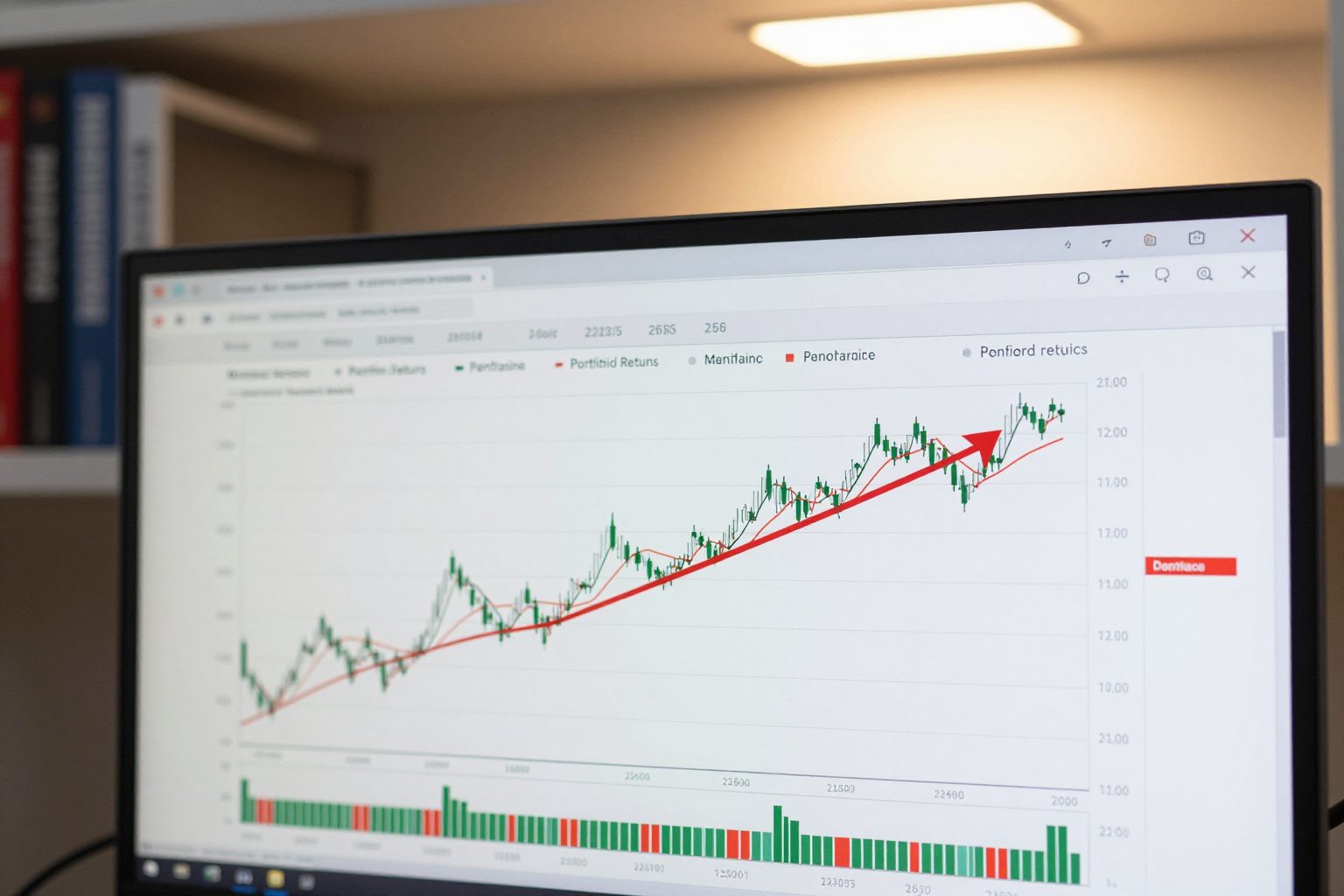
Performance Attribution Explained: Why Your Statement's Rate of Return Doesn't Tell You What You Need to Know
Your annual statement shows a single return figure — say, 8.2%. But that number obscures the critical question: where did that return come from, and how much did fees consume? Performance attribution decomposes returns into asset allocation effect, security selection effect, currency impact, and fee drag. We walk through a real client example where a reported 8.2% gross return translated to a 5.9% net return after accounting for layered MERs, trailing commissions, and trading costs — a $23,000 annual gap the client had never seen quantified. Marcus Beaulieu explains the methodology from our internal database of 2,400+ Canadian mutual funds and ETFs, ranked by total cost of ownership. Learn more about our Performance Attribution & Benchmark Reporting service.
The $267,000 Question: What Trailer Commissions Actually Cost a Small Business Owner Over a Decade
A 1.0% trailer commission on a $1.7 million portfolio compounds into six figures of lost retirement capital. We demonstrate the total cost of ownership across three common advisor compensation models — trailer, fee-based, and fee-only — with dollar figures, not percentages. Drawn from an actual client engagement with Prairie Mechanical Ltd., this article walks through the line-by-line fee breakdown that Marcus Beaulieu assembled during the consolidation audit, including the $412,000 in redundant equity exposure that five separate advisors never identified.
Performance Attribution Explained: Why Your Statement's Rate of Return Doesn't Tell You What You Need to Know
Your annual statement shows a single return figure — say, 8.2%. But that number obscures the critical question: where did that return come from, and how much did fees consume? Performance attribution decomposes returns into asset allocation effect, security selection effect, currency impact, and fee drag. We walk through a real client example where a reported 8.2% gross return translated to a 5.9% net return after accounting for layered MERs, trailing commissions, and trading costs.
Why Your Advisor Says You're 'On Track' — And Why That Phrase Means Nothing Without a Number
We examine the common practice of qualitative reassurance in place of quantitative analysis. A real retirement readiness assessment contains Monte Carlo simulation across 1,000+ iterations, tax-adjusted withdrawal sequencing across RRSP/RRIF, TFSA, and non-registered accounts, and CPP timing analysis comparing early versus delayed election. Most clients receive a risk-tolerance questionnaire and a brochure. Priya Venkatesh walks through the exact model she built for a self-employed photographer in Canmore — where "on track" turned out to mean a 27% probability of capital depletion by age 84.
The Passive Income Trap: How Alberta Business Owners Are Losing Their Small Business Deduction Without Knowing It
The Section 125(5.1) passive income rules introduced in 2018 mean investment income inside a holding company can silently erode the small business deduction — costing an additional $27,500 to $40,000+ in federal tax per year. Once aggregate investment income exceeds $50,000, the clawback begins at $5 for every $1 of excess passive income. This article includes a self-assessment checklist, RDTOH recovery calculations, and three restructuring scenarios modeled using real Alberta corporate tax rates.
Your Employer's Group RRSP Probably Hasn't Been Reviewed Since It Was Set Up — Here's What That's Costing Your Employees
Industry data suggests fewer than 30% of group plans with under 100 participants have been reviewed in the past three years. We present the typical fee gap between competitively tendered plans and those operating on inertia — often 0.80% to 1.40% in unnecessary MER drag — alongside the measurable impact on employee participation and retention. Darren Falk details the benchmarking methodology applied during the Bow River Dental Group engagement, where participation rose from 38% to 71% in nine months.
Seven Questions to Ask Before Your Family's First Investment Governance Meeting
Multi-generational families managing combined assets frequently lack governance structures, leading to suspicion, unequal information access, and decisions made by default rather than design. This practical guide outlines the foundational questions every family must address before the first quarterly meeting: Who has decision-making authority? How are conflicting risk tolerances reconciled? What reporting cadence ensures transparency without micromanagement? Nadia Okafor shares the framework that has resolved disputes in families managing $2 million to $8+ million in combined assets across Alberta and British Columbia.
The Analysts Behind Every Article
Every piece of published research is authored or reviewed by a member of our consulting team — the same individuals who perform the analytical work inside paid client engagements. There are no ghostwriters, no outsourced content teams, and no marketing departments writing copy that consultants never see.
Nadia Okafor, CFA, CFP®
Founder & Principal Consultant. Former portfolio strategist at TD Wealth Management managing discretionary mandates exceeding $400 million. Nadia authors our governance and fee transparency research, drawing on seven years of institutional experience and eight years of independent consulting. MBA, Haskayne School of Business.
Priya Venkatesh, CPA, CGA
Tax & Drawdown Strategy Analyst. Former MNP LLP private enterprise taxation specialist. Priya writes our retirement planning and corporate surplus articles, building every projection from the same Monte Carlo and tax-overlay models used in client engagements. Her work on CPP timing and OAS clawback optimization has become our most-referenced content.
Darren Falk, CIM®
Senior Investment Consultant. Nine years at Manulife's group retirement division in Edmonton. Darren contributes research on group plan benchmarking, default fund selection, and employee participation strategies — topics drawn directly from his experience designing investment options for plans covering 12,000+ participants.
Marcus Beaulieu
Research Analyst & Reporting Lead. Master of Finance, University of Alberta. Marcus maintains our internal database of 2,400+ Canadian mutual funds and ETFs ranked by total cost of ownership, and provides the quantitative backbone for every performance attribution and fee comparison article we publish.
Why Our Research Contains Numbers Your Advisor's Newsletter Never Will
Every piece of analysis we release follows the same framework applied inside our paid engagements. Numbers are sourced from actual client data (published with permission), regulatory filings, fund fact sheets, and Statistics Canada datasets. Percentages are converted into dollar figures — because $18,400 per year demands attention in a way that 1.84% never will. Assumptions are stated explicitly and stress-tested against multiple scenarios. We do not publish opinion pieces, market predictions, or product endorsements.
Our editorial process mirrors consulting quality controls: every article is drafted by the lead analyst, fact-checked against source data by Marcus Beaulieu, reviewed for tax accuracy by Priya Venkatesh, and approved by Nadia Okafor before publication. If a number cannot be independently verified, it does not appear. If a conclusion requires a caveat, the caveat is stated prominently — not buried in a footnote. This standard exists because our research is a public extension of the documentation we deliver inside client engagements, and we refuse to hold published content to a lower standard than a paid report.
Understand These Terms and You'll Read Your Portfolio Like a Consultant
We use these terms precisely throughout our publications. Understanding them equips you to evaluate your own portfolio with the same analytical lens our team applies during a Fee Audit or Portfolio Construction Review. Bookmark this section — you will encounter these concepts in every article above and in the case studies documenting our client engagements.
MER (Management Expense Ratio)
The annual cost of owning a mutual fund or ETF, expressed as a percentage of assets, encompassing management fees, operating expenses, and applicable taxes (including HST/GST). Canadian equity mutual funds carry an average MER of approximately 2.0% — among the highest in the developed world. Our research converts every MER into a dollar figure projected across your specific time horizon. On a $500,000 portfolio, a 2.0% MER means $10,000 leaving your account every year before your investments earn a single dollar of return. Over 20 years with compounding, that cost can exceed $280,000.
Trailer Commission
An ongoing fee — typically 0.50% to 1.00% annually — paid by a fund company to a financial advisor's dealer for as long as the client holds the fund. Often undisclosed to clients in any meaningful way, trailer commissions are embedded inside the MER and create a direct financial incentive for advisors to recommend higher-cost funds over lower-cost alternatives. This single cost category has been the subject of more Suncentral engagements than any other. In the Prairie Mechanical case study, trailer commissions accounted for $17,000 of the $39,000 in annual fees Grant Hirsch did not know he was paying.
Monte Carlo Simulation
A statistical technique using random sampling across 1,000+ iterations to model the range of probable outcomes for an investment portfolio or retirement plan. Rather than relying on a single "expected return" assumption — which implies a certainty that does not exist — Monte Carlo analysis generates a probability distribution showing the likelihood of various outcomes under different market conditions. We use Monte Carlo analysis in every drawdown planning engagement to estimate the probability of capital lasting through ages 85, 90, and 95, incorporating variable inflation, sequence-of-returns risk, and tax-adjusted withdrawal rates.
Performance Attribution
The analytical process of breaking portfolio returns into component sources: which portion came from asset allocation decisions, which from specific security selection, which from currency impact, and which was consumed by fees. Without attribution, a 7% annual return tells you almost nothing — it could mean your allocation earned 9% and fees consumed 2%, or it could mean your allocation earned 7.3% and fees consumed 0.3%. The implications for your long-term wealth are vastly different. Every ongoing consulting client receives a quarterly performance attribution report benchmarked against a custom blended index matching their stated investment policy.
Holdings Overlap
A condition where multiple funds in the same portfolio hold substantially identical underlying securities — creating the illusion of diversification while concentrating risk. During the Prairie Mechanical engagement, Marcus Beaulieu's overlap matrix revealed that four of Grant Hirsch's 14 mutual funds shared over 60% of the same underlying equities. The client believed he was diversified across six accounts; in reality, his effective equity exposure was concentrated in fewer than 40 individual companies. Our Portfolio Construction Review identifies and quantifies overlap across every holding.
Passive Income Clawback
Under Section 125(5.1) of the Income Tax Act, a Canadian-controlled private corporation (CCPC) loses $5 of its small business deduction for every $1 of aggregate investment income exceeding $50,000. For a holding company generating $90,000 in annual investment income, this translates to a $200,000 reduction in the business limit — and an additional $27,500 to $40,000+ in federal tax. Our Corporate Surplus & Holding Company Strategy service designs investment allocations that balance after-tax returns against this clawback threshold.
Free Quarterly Workshops That Teach You What Advisors Charge to Explain
Each quarter, Suncentral delivers a complimentary investment literacy session for small business owners through the Calgary Chamber of Commerce. Topics have included fee transparency, registered account optimization, and the passive income rules affecting holding companies. These sessions are open to any business owner operating in Alberta or British Columbia — attendance requires no commitment and carries no sales pitch. Nadia Okafor or Darren Falk leads each session personally, using the same analytical frameworks and real-world examples found in our published research and documented case studies.
Recent Topics Covered
How to read your fund's Management Report of Fund Performance (MRFP) and extract the total cost of ownership — including the trading expense ratio that most investors have never encountered; the interaction between CPP timing decisions and OAS clawback thresholds, with specific dollar calculations for five different election ages; master service agreement frameworks for selecting and evaluating financial advisors, including the 28 due diligence criteria we apply during our Advisor Selection engagements; and resource utilization tracking for business owners managing corporate surplus investments alongside operating capital, a critical distinction for owners navigating the passive income rules.
Upcoming Session — Q1 2026
The next session focuses on waterfall milestone tracking for decumulation strategies — building a structured withdrawal plan that triggers specific actions at defined portfolio thresholds, rather than reacting to market volatility in real time. Priya Venkatesh will walk attendees through the same Monte Carlo-driven drawdown model she uses inside Retirement Drawdown & Decumulation Planning engagements, including the tax-adjusted withdrawal sequencing that determines which account to draw from at each stage of retirement. Enterprise resource planning principles applied to personal and corporate investment management will also be addressed. To register or receive notification of upcoming workshops, reach out to our team.