What Our Clients' Previous Advisors Overlooked — Exposed in Documented Detail
Every case study below is drawn from an actual Suncentral engagement. Names are used with client permission. Dollar figures are real. Timelines are documented. We publish these not as marketing — we publish them because the patterns repeat: hidden fees, neglected plans, concentrated risk, and absent governance. The same structural problems that our ten consulting services are designed to address appear in nearly every portfolio we open. If any of these scenarios resembles your own situation, the similarities are unlikely to be coincidental.
How a Red Deer Contractor Recovered $267,000 in Hidden Fees — Prairie Mechanical Ltd.

Commercial Contractor / Owner-Operator
The Client
Prairie Mechanical Ltd. — a commercial HVAC contractor in Red Deer, Alberta, with 85 employees and approximately $14 million in annual revenue. Owner Grant Hirsch had built the business over 22 years, reinvesting profits and accumulating retirement savings across multiple institutions as relationships evolved and advisors changed. By the time he contacted Suncentral, his financial picture was fragmented across half a dozen accounts that no single person — including Hirsch himself — had ever viewed as a unified portfolio.
The Problem
Hirsch had $1.7 million across six accounts with five advisors at three institutions. Nobody had a consolidated view. Blended fees: 2.31% annually — a figure Hirsch had never seen stated in dollar terms. He held 14 mutual funds, four of which carried over 60% overlap in underlying equities, meaning he was effectively paying multiple management fees for exposure to the same stocks. Three of the accounts held deferred sales charge (DSC) funds with redemption schedules extending to 2026. Two advisors had placed him in Series A fund units when lower-cost Series D and Series F units were available at the same institutions. No advisor had ever produced a written investment policy statement or a consolidated performance report.
Our Approach
Full consolidation audit. Marcus Beaulieu mapped every holding across all six accounts using Suncentral's internal database of over 2,400 Canadian mutual funds and ETFs ranked by total cost of ownership. We identified $412,000 in redundant equity exposure — positions in four separate Canadian large-cap equity funds that held substantially identical underlying stocks — and $83,000 in fixed-income holdings misaligned to Hirsch's 2032 retirement target. The fixed-income allocation included a long-duration bond fund with an average maturity of 14 years, inappropriate for an investor eight years from retirement. Priya Venkatesh modeled tax implications of restructuring, identifying a sequence of redemptions that would spread capital gains realization across two calendar years to minimize the immediate tax impact. Every fee — MERs, trailer commissions, platform charges — was converted from a percentage into an annual dollar figure, as we do in every Fee Audit & Cost Disclosure engagement.
The Outcome
Blended fees dropped from 2.31% to 0.74% — a difference of $26,700 per year on the current portfolio value. Over the 8-year retirement runway, projected fee savings: $267,000 (assuming 5% average annual growth on the underlying portfolio). Holdings were consolidated from 14 funds to 7, eliminating all overlap. Monthly consolidated reporting replaced five separate statements arriving at different times. Hirsch now receives a quarterly Performance Attribution Report that decomposes returns into asset allocation effect, security selection, and fee drag — benchmarked against a custom blended index matching his stated policy allocation. The DSC funds were mapped to a structured redemption timeline that minimized early redemption penalties.
Discuss a Similar SituationHow a Calgary Dental Practice Doubled Employee Plan Participation — Bow River Dental Group

Healthcare Practice / Group Plan
The Client
Bow River Dental Group — a three-location dental practice in Calgary with 12 associate dentists and 40 support staff, including dental hygienists, assistants, and administrative personnel. The practice had been operating a group RRSP since 2015, established through the original practice's banking relationship when the group expanded from one location to three. Dr. Anita Chahal, managing partner, contacted Suncentral after noticing declining employee engagement with the plan during annual reviews.
The Problem
The group RRSP had been established in 2015 and never reviewed — not once in over seven years. Employee participation had dropped to 38%, well below the Canadian healthcare sector average of 62%. The default fund — the fund into which contributions flowed when employees did not make an active selection — carried a 2.18% MER, more than four times the cost of comparable index alternatives available in the market. No employee investment education had been delivered in four years. Exit interviews with departing staff revealed that several employees did not understand the employer matching formula, and two did not know the plan existed. The provider's quarterly statements were dense, jargon-heavy, and rarely opened. Seven of the eleven fund options on the plan shelf had underperformed their stated benchmarks for three consecutive calendar years.
Our Approach
Darren Falk led the Group Retirement Plan Review, beginning with an anonymous survey of all 52 employees to assess understanding, satisfaction, and barriers to participation. Survey results revealed that 44% of non-participants cited confusion about fund options as the primary reason for not enrolling. Darren reviewed every fund option against comparable healthcare sector plans at three competing providers, benchmarking fees, fund performance over one-, three-, and five-year periods, and the breadth of investment choices available. The competitive analysis confirmed that the incumbent provider's fee schedule was 0.82% higher than the median of the three alternatives — a difference that compounded to significant lost retirement capital across the employee base over a career.
The Outcome
Provider switch implemented Q2 2023 after a structured RFP process that evaluated four qualified providers against 28 criteria. New plan: 34 fund options including a robust selection of index options below 0.45% MER, target-date funds for employees preferring a hands-off approach, and a balanced default fund with a 0.38% MER — replacing the previous 2.18% default. Three employee education sessions were delivered — one at each practice location during lunch hours — covering how the plan works, how matching contributions compound over time, and how to select funds appropriate for different career stages. Participation rose from 38% to 71% in nine months. Average contribution rates increased from 3.1% to 4.8% of gross salary. The plan now undergoes annual review, with Suncentral providing ongoing oversight to ensure fund quality and fee competitiveness are maintained.
Discuss a Similar SituationHow an Energy Company Built a Portfolio That Moves Opposite Its Revenue — Hightower Oilfield Services Inc.

Energy Sector / Corporate Surplus
The Client
Hightower Oilfield Services Inc. — a well-servicing company headquartered in Lloydminster, Alberta, with $22 million in annual revenue, 140 field and office employees, and $4.8 million in a holding company investment account managed through a major Canadian bank's wealth management division. The company's founders, a husband-and-wife team with 28 years in the oilfield services sector, had accumulated the holding company assets from retained earnings over a decade. Their bank-appointed advisor had invested the portfolio in what felt familiar: Canadian equities, predominantly in the energy sector they knew best.
The Problem
72% of the investment portfolio was Canadian equities — predominantly energy sector names including Suncor, Canadian Natural Resources, Cenovus, and several mid-cap producers. Correlation between business revenue and portfolio returns: 0.87 on a five-year rolling basis. This meant that when oil prices dropped and the company's operating revenue declined, the investment portfolio declined in near-lockstep. The portfolio was amplifying business risk rather than hedging it. If a sustained downturn occurred — as it had in 2014–2016 and again briefly in 2020 — the company would face declining revenue, declining portfolio value, and potential need to draw on its operating line of credit simultaneously. The holding company also faced exposure to the passive income rules under Section 125(5.1) of the Income Tax Act, with investment income approaching the $50,000 threshold that triggers erosion of the small business deduction in the operating company.
Our Approach
Nadia Okafor built a comprehensive correlation analysis across five years of monthly data, mapping the statistical relationship between WTI crude oil prices, the company's quarterly revenue, and the portfolio's monthly returns. We then modeled five alternative allocation scenarios using Suncentral's Portfolio Construction Review framework, varying exposure across international equities (U.S., EAFE, and emerging markets), investment-grade Canadian and global bonds, real assets (infrastructure and real estate investment trusts), and money market instruments. Each scenario was evaluated for expected return, standard deviation, maximum drawdown, correlation to operating revenue, and impact on passive investment income for purposes of the Section 125(5.1) calculation. Priya Venkatesh modeled the tax implications of each scenario through the Corporate Surplus & Holding Company Strategy framework, identifying the allocation that optimized after-tax returns while keeping passive income below the threshold.
The Outcome
Canadian equity exposure was reduced from 72% to 31%, with the freed-up allocation redistributed to international equities (24%), investment-grade bonds (22%), real assets (13%), and a 10% money market buffer. Correlation between business revenue and portfolio returns dropped from 0.87 to 0.34 — a fundamental transformation of the portfolio's role from a risk amplifier to a genuine diversifier. During the Q4 2023 oil price decline, Hightower's operating revenue fell 16%, but the restructured portfolio returned +1.9%, providing the cash buffer necessary to avoid drawing on the operating line of credit — saving an estimated $38,000 in interest charges over the quarter. Passive investment income was restructured to remain below the $50,000 threshold, preserving the full small business deduction in the operating company. The portfolio now operates under a written Investment Policy Statement with quarterly rebalancing triggers and annual correlation monitoring.
Discuss a Similar SituationHow a Housing Cooperative Avoided a 31% Special Assessment — Ridgeline Homes Cooperative
Housing Cooperative / Reserve Fund
The Client
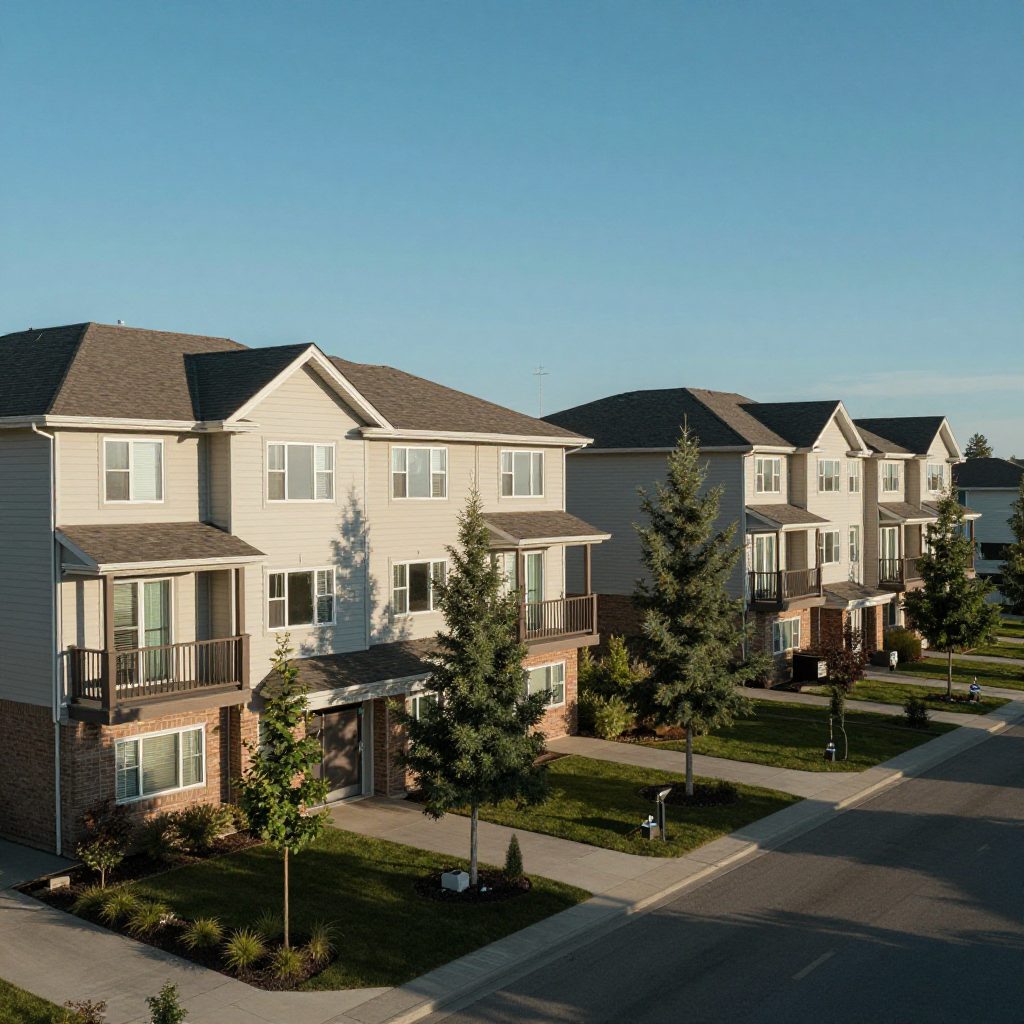
Ridgeline Homes Cooperative — a 260-unit housing cooperative in southwest Calgary governed by a seven-member volunteer board of directors. The cooperative, established in 2004, houses a mix of families, retirees, and young professionals. Board members serve two-year terms and bring varied professional backgrounds — none in investment management. The cooperative had retained its reserve fund at the same credit union since inception, rolling GIC certificates on an annual basis without competitive review or strategic planning. Board chair Donna Flett contacted Suncentral after an updated reserve study revealed a funding gap that would require a special assessment large enough to threaten the financial stability of many member households.
The Problem
The reserve fund of $1.2 million was held entirely in GICs at 1.65% annually — a rate that had been negotiated once, seven years prior, and never renegotiated despite rising interest rates elsewhere in the market. An updated reserve study, completed by an independent engineering firm, projected the cooperative would need $3.1 million within 12 years to address roof replacements, elevator modernization, boiler system upgrades, and parking structure maintenance. At the current GIC rate and existing contribution schedule, the fund would reach approximately $1.58 million — a shortfall of $1.52 million. Closing that gap through a single special assessment would require a 31% levy on members, amounting to approximately $5,800 per unit. For retirees on fixed incomes — roughly 30% of the cooperative's membership — this assessment posed a genuine hardship. The board had no written investment policy, no governance documentation for fund management, and no framework for evaluating investment alternatives within the constraints of the Alberta Cooperatives Act.
Our Approach
Darren Falk and Marcus Beaulieu reviewed the reserve study in detail, mapping every anticipated expenditure by year and magnitude. They also reviewed the cooperative's bylaws, the Alberta Cooperatives Act requirements governing reserve fund management, and the fiduciary obligations of volunteer board members. We designed a liability-driven investment strategy that matched anticipated cash outflows — each major capital expenditure — to a laddered portfolio of GICs, investment-grade bonds, and a conservative balanced fund for the portion of the reserve not needed within the first five years. The strategy preserved capital for near-term obligations (years 1–5) in guaranteed instruments while allowing the longer-dated portion (years 6–12) to earn higher returns through a diversified allocation. A written investment policy statement was developed for the reserve fund, establishing permitted investment types, maximum allocation limits, credit quality requirements, and a semi-annual review schedule — giving the volunteer board a clear governance framework they could follow regardless of which members served in future terms.
The Outcome
Projected annualized return increased from 1.65% to 4.2% (net of fees) — generating approximately $580,000 in additional growth over 12 years compared to the all-GIC approach. Combined with a modest 2.5% annual contribution increase (approximately $12 per unit per month, rather than a $5,800 lump-sum special assessment), the fund was projected to close 89% of the original gap. The remaining 11% gap was addressed by deferring one lower-priority maintenance item by two years, as supported by the engineering firm's assessment. The board now operates with a written investment policy statement, receives semi-annual reporting from Suncentral in plain language suitable for presentation at member meetings, and conducts an annual competitive review of GIC and bond rates.
Discuss a Similar SituationDonna Flett noted the reserve fund report was the first document in the cooperative's 19-year history that members actually read at an AGM. "People stayed after the meeting to ask questions — that has never happened before."
Measurable Results Documented Across Every Engagement
These figures are drawn directly from the case studies above. Every number is documented in the corresponding engagement file and verified against client records.
The Four Structural Problems Costing You Money Right Now
Across hundreds of consulting hours and dozens of client portfolios since 2017, the same structural problems surface repeatedly. Each case study above illustrates at least one of these patterns — and most clients exhibit several simultaneously. Our published research explores these patterns in greater analytical depth, with specific dollar figures and methodologies you can apply to your own situation.
Fee Opacity
Clients cannot state, in dollar terms, what they pay annually for investment management. Percentages feel abstract; $18,000 per year in fees on a $900,000 portfolio demands attention. Prairie Mechanical was paying $39,000 annually in fees Grant Hirsch did not know existed — trailer commissions, overlapping MERs, and platform charges buried across six accounts. This is the single most common finding in our Fee Audit & Cost Disclosure engagements. The average annual fee reduction identified per engagement from 2022 to 2025: $34,200. That number is not theoretical — it is the documented average across every audit we have delivered.
Portfolio Neglect
Small and mid-market clients frequently report that their advisor contacts them once or twice per year, often with generic market commentary rather than portfolio-specific analysis. Bow River Dental's group plan ran untouched for four years — no fund review, no fee benchmarking, no employee education, no participation audit. Industry data suggests fewer than 30% of group plans with under 100 participants have been reviewed in the past three years. At Suncentral, every ongoing consulting client receives a minimum of four substantive portfolio consultations annually through our Group Retirement Plan Review and Performance Attribution services — not automated check-ins, but documented analysis sessions with specific findings.
Business-Portfolio Correlation
Business owners in cyclical industries — energy, construction, agriculture, hospitality — often hold portfolios concentrated in the same sectors as their operating businesses, doubling their downside exposure during the exact market conditions when they need portfolio stability most. Hightower's 0.87 correlation meant the investment portfolio amplified business risk rather than hedging it. When oil prices fell, revenue dropped and the portfolio dropped simultaneously — the worst possible outcome for a company that might need to access those investment assets to bridge a revenue shortfall. Our Portfolio Construction Review includes correlation analysis as a standard component for every business-owner client, mapping the statistical relationship between operating revenue and portfolio returns over rolling five-year periods.
No Written Plan
A startling number of investors — including business owners with seven-figure portfolios — have never seen a written investment policy, retirement projection, or withdrawal strategy. Ridgeline's volunteer board operated for 19 years without governance documentation for a $1.2 million reserve fund. Individual business owners routinely tell us their advisor has never produced a written Investment Policy Statement. Without a written plan, there is no benchmark against which to measure performance, no rebalancing trigger to enforce discipline, no fee ceiling to prevent cost creep, and no documented framework for making decisions during market stress. The plan is the foundation — and in the majority of portfolios we review, it does not exist.
Which Scenario Matches Your Situation?
Each case study above maps to specific services in our consulting practice. If you recognize your own circumstances in one or more of these scenarios, the relevant service links below will show you exactly what an engagement involves — scope, timeline, deliverables, and how fees are structured.
Like Prairie Mechanical?
Multiple accounts, multiple advisors, no consolidated view, and fees you have never seen stated in dollars. Start with a Fee Audit & Cost Disclosure — 2–3 weeks to a complete picture of what you are actually paying.
Like Bow River Dental?
An employer-sponsored group plan that has not been reviewed since it was established, declining participation, and no employee education. Our Group Retirement Plan Review benchmarks your plan against competitors and delivers a clear path to better outcomes for your team.
Like Hightower Oilfield?
A holding company portfolio concentrated in the same sector as your operating business, with passive income approaching the threshold that erodes your small business deduction. Our Corporate Surplus & Holding Company Strategy addresses both the diversification problem and the tax optimization simultaneously.
Like Ridgeline Homes?
A reserve fund, endowment, or institutional pool managed without a written policy, earning below-market returns, and facing a projected shortfall. Our Investment Policy Statement Development combined with a Portfolio Construction Review creates the governance framework and investment strategy together.